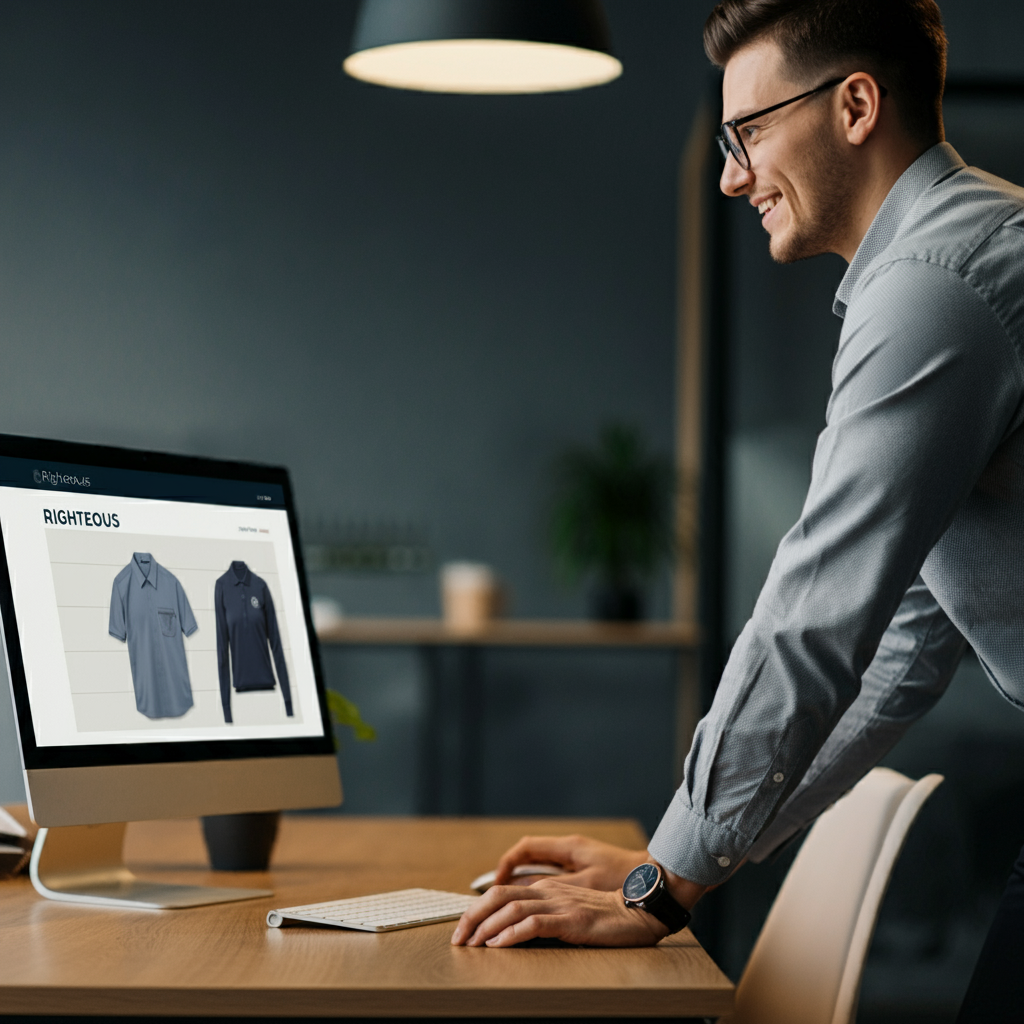

Managing team uniforms sounds straightforward until your company starts growing. Someone leaves. Three people start on the same Monday. You open a second location. Suddenly, that box of leftover medium polos in the back room feels less like a supply buffer and more like a mistake you paid for twice.
Most companies default to one of two approaches: place one big bulk order and hope the sizing math works out, or set up a company store where employees order their own gear. The choice feels administrative. It really isn’t.
Getting it wrong costs real money, real time, and a lot of uncomfortable conversations about why the new hire is still waiting on a shirt two weeks in. That’s the company store vs. bulk uniform ordering question, and it matters a lot more than most teams realize until they’re stuck dealing with the consequences.
In this blog, we break down company store vs. bulk uniform ordering so you can choose the setup that actually fits how your team operates today and scales tomorrow.
What We Actually Mean by Bulk Uniform Ordering
Bulk ordering is the old-school playbook. You estimate what your team needs, determine sizes, place a single large order, and wait for everything to arrive at once. Companies have done it this way for decades, and for a long time, it made complete sense.
The model runs on a few assumptions: your headcount is stable, your size distribution is predictable, and you can forecast what you need before you actually need it. When those things are true, bulk vs. on-demand uniforms isn’t a close call. Bulk wins on simplicity and cost per unit.
When those assumptions fall apart, you end up with 40 extra-larges collecting dust and 3 people waiting on smalls for 6 weeks. Re-orders require minimum quantities. Lead times mean you can’t move fast when hiring spikes. The model starts to creak the second real pressure shows up.
What a Company Store Actually Is and How It Works
A company store is a branded online portal where employees log in and order their own gear. Think of it as your internal merch shop, built for your team and the way your company actually runs. Employees pick their size, select their items, and the order ships directly to them, whether they sit twenty feet from you or work remotely across the country.
The employee company store setup can work in two ways. Pre-stocked stores hold ready inventory that ships immediately. On-demand stores produce items only after someone places an order, eliminating overstock but adding a short production window. Most corporate apparel ordering portal setups blend both, depending on which items move fastest.
Under this model, employees handle their own sizing, and HR gets to stop playing middleman. Orders track automatically. Distributed teams get gear without anyone coordinating a group shipment from a central office.
Where Bulk Ordering Still Makes Sense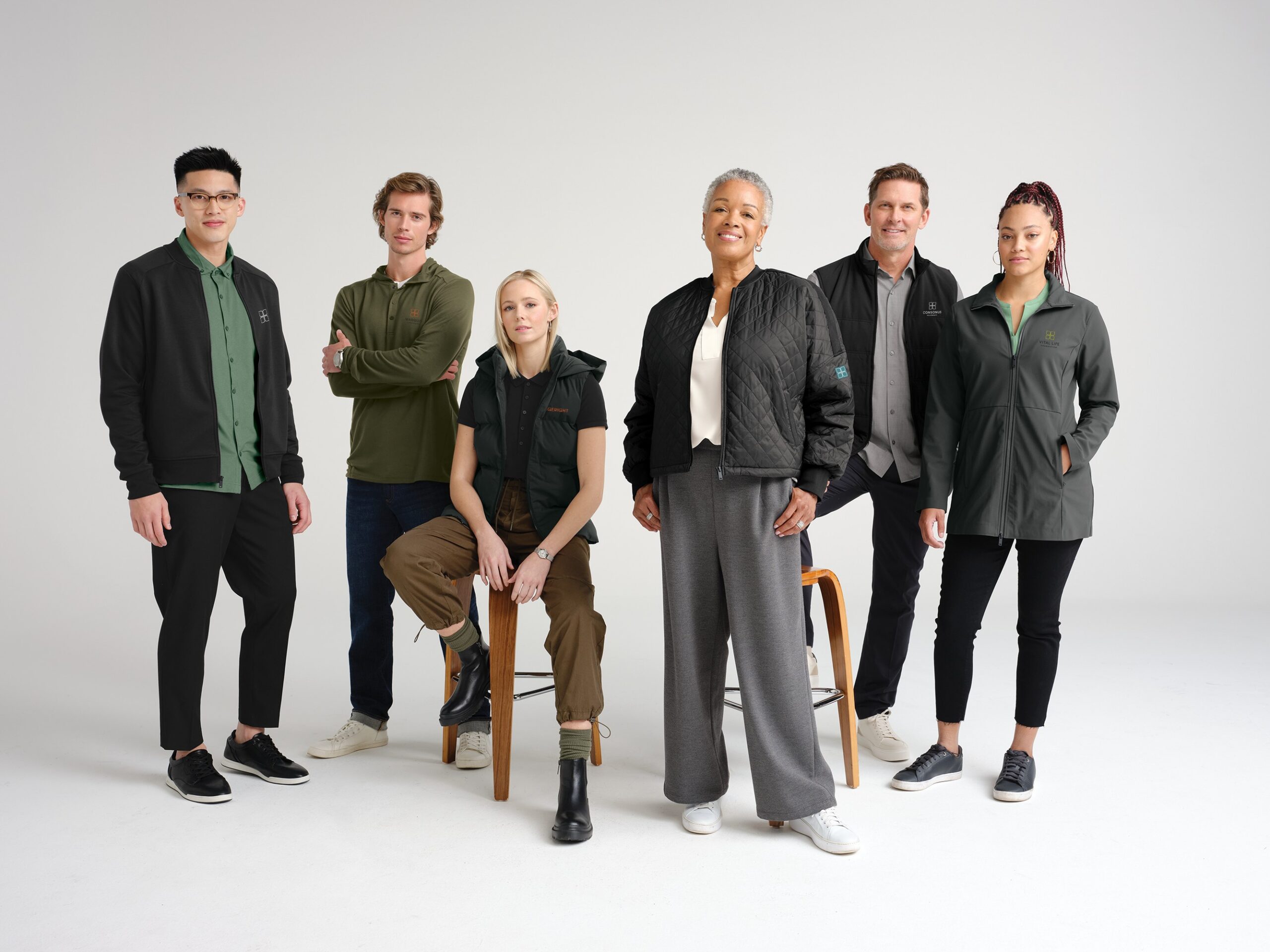
Bulk isn’t outdated. For the right business, it can still be the smarter call. Uniform-heavy industries with stable, predictable teams, think construction crews, restaurant staff, or retail teams with low turnover, can still get a lot out of it. When your headcount doesn’t shift much, and your size distribution is consistent, a large order locks in a lower cost per unit and keeps the whole process clean.
The tradeoffs are real and worth naming. Leftover stock is almost always part of the deal. Size mismatches happen when estimates are off. Re-orders mid-cycle tend to cost more per unit than the original order did. For companies where those risks stay manageable, bulk delivers solid value. For companies where they don’t, it creates ongoing friction that nobody budgeted for.
Where a Company Store Pulls Ahead
Branded company store benefits become obvious fast when teams grow quickly, shift frequently, or spread across multiple locations. If your headcount changes quarter to quarter or you’re onboarding people in different cities, running a bulk order cycle starts to feel like hitting a moving target with a blindfold on.
The admin relief alone can be worth it.. HR and operations teams stop fielding size requests, chasing re-orders, and managing inventory spreadsheets. Employees self-serve. Gear ships directly. The process scales without quietly eating up hours every week.
Remote and distributed teams benefit the most. A company store means a new hire in Austin gets the same branded gear as someone starting at your main office, on the same timeline, without anyone manually boxing and shipping a package. That’s the company store vs bulk uniform ordering gap that really shows up at scale.
The Real Cost Comparison
Bulk orders often win on unit price, and that number always looks great in a spreadsheet. The full picture includes storage for surplus stock, waste when gear goes unused, and the expense of re-ordering when sizes run out between cycles. Those numbers add up in ways that rarely appear in the original quote.
Company stores carry their own cost factors. Setup fees, platform costs, and slightly higher per-unit pricing on on-demand items are legitimate considerations. For smaller teams or very stable rosters, those costs can outweigh the convenience. For growing companies, they usually don’t.
The smarter question when comparing bulk vs. on-demand uniforms is the total cost of ownership over 12 months, not what one shirt costs at checkout. Factor in waste, admin time, re-orders, and how often your team composition actually changes. That math usually tells a much more honest story than unit price alone.
Can You Run Both? The Hybrid Approach
Some companies find the cleanest answer is to run both models at once. Bulk handles core uniform items that everyone needs in predictable quantities. A company store covers seasonal gear, role-specific pieces, or items that vary by personal preference.
Layering by department works well, too. A field team with consistent sizing and daily uniform needs might run on a basic budget. A corporate or hybrid team that needs occasional branded pieces might use the store. When the split is logical, the hybrid approach genuinely simplifies things. When there’s no clear logic behind it, it just adds moving parts without solving much.
What to Think About Before You Decide
Before you commit to either model, it helps to pressure-test a few things honestly. How fast is your team growing, and how often does your roster change? High turnover or frequent hiring means on-demand flexibility matters more than bulk pricing. A stable, consistent team may do fine on bulk for years.
Geography matters. A single-location business with everyone under one roof is a different situation from a company with staff across multiple regions. The more distributed your team, the more a corporate apparel ordering portal starts to look like the obvious answer. The more centralized, the more a good employee company store setup might feel like overkill for your actual needs.
And think about admin bandwidth, too. If managing uniform logistics eats hours every month, that’s a cost worth solving, even if it doesn’t show up on any invoice.
Find the Perfect Apparel System for Your Team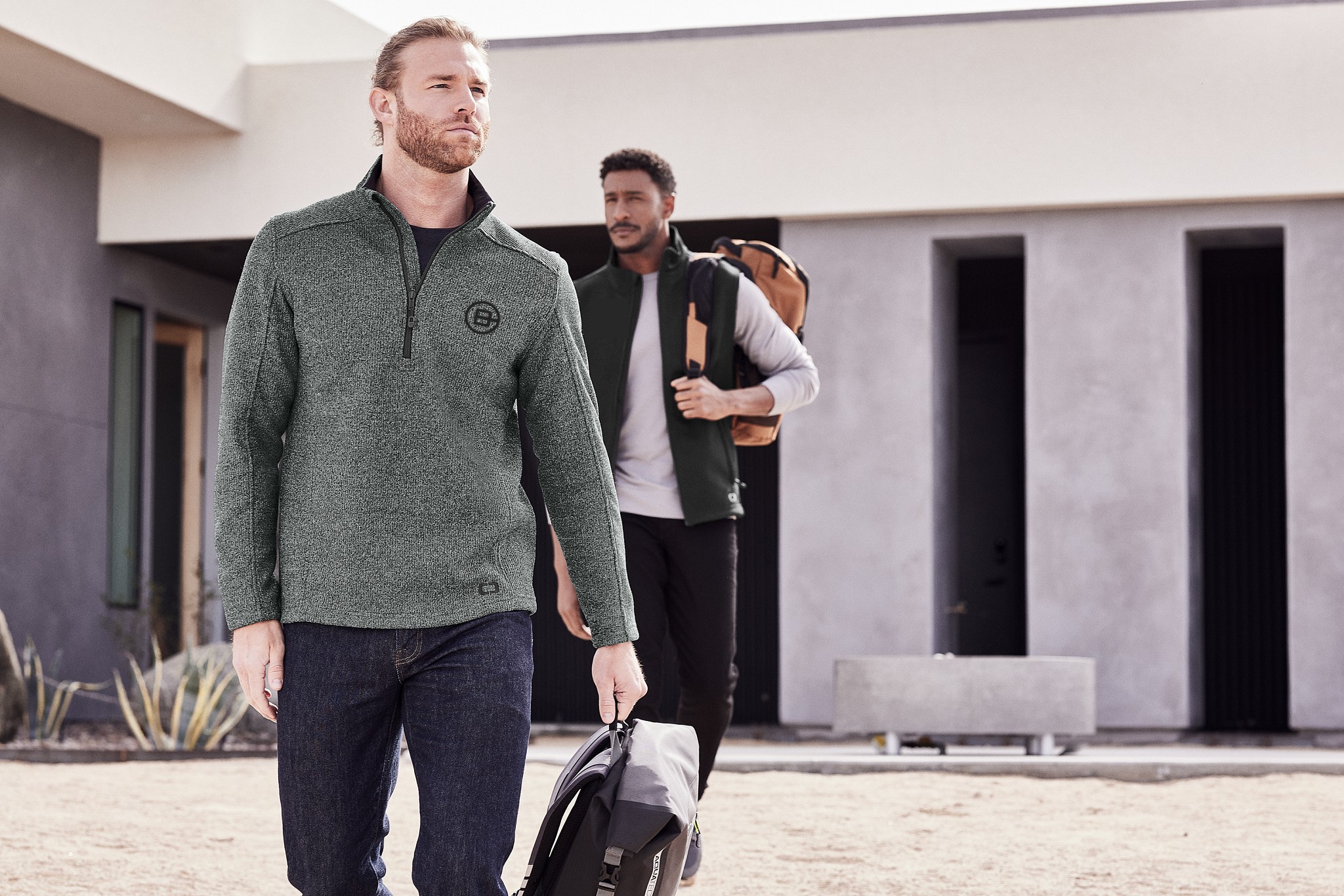
Neither model is universally better. The right fit comes down to how your company actually runs today and where it’s headed next. A useful gut check: if you’ve had to re-order unexpectedly more than twice in the past year, or if someone owns “uniform coordinator” as an unofficial second job, a better system is worth exploring. If your team is tight, consistent, and in one place, bulk may still be your best move.
When you’re ready to figure out which setup actually fits, we can help you work through it.
At Righteous, we help growing companies build apparel programs that match how they actually operate, whether that’s a streamlined bulk setup, a full company store, or a hybrid that makes life easier.