The service industry is loud, fast, and unforgiving. Lunch rush bleeds into prep for dinner. Margins are tight. Staff turnover is real. And somehow, in the middle of all that, your team still has to look sharp. Not polished-for-Instagram good. Real-life good. The kind that holds up under steam, spills, and double shifts.
This is where restaurant-branded apparel stops being an afterthought and starts doing real work. When it’s done right, merch isn’t just something hanging by the register. It becomes uniform, marketing, and culture rolled into one. It quietly tells guests, “We care about the details.”
In this blog, we’ll break down how cafes and restaurants can build gearprograms that actually work, from aprons to branded organic tees, and why thoughtful execution matters more than ever.
Why Merch Matters More Than Most Cafes and Restaurants Think
Guests already document your space. They photograph latte art, tiled walls, neon signs, and pastry cases, and what your team is wearing ends up in those photos, whether you planned for it or not. What your team wears becomes part of your brand. For regulars, merch is emotional.
For staff, the impact is even bigger. A well-made apron or tee says you thought about comfort, durability, and fit. That matters in an industry where people are on their feet all day and often feel replaceable. Good merch doesn’t feel like a dress code. It feels like being taken seriously.
The Difference Between “We Printed a Logo” and “We Built a Merch Program”
Most restaurants have printed a logo on something at least once. That doesn’t mean they have a merch program.
Intentional vs. Random Merch
Throwing your logo on the cheapest blank you can find is not a strategy. A merch program considers who’s wearing it, where it’s being worn, and why it exists in the first place.
You’re balancing staff needs, guest appeal, brand story, and revenue potential. That takes thought. It takes restraint. And it takes understanding that less, done better, almost always wins.
Uniforms That Double as Brand Assets
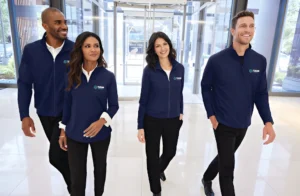
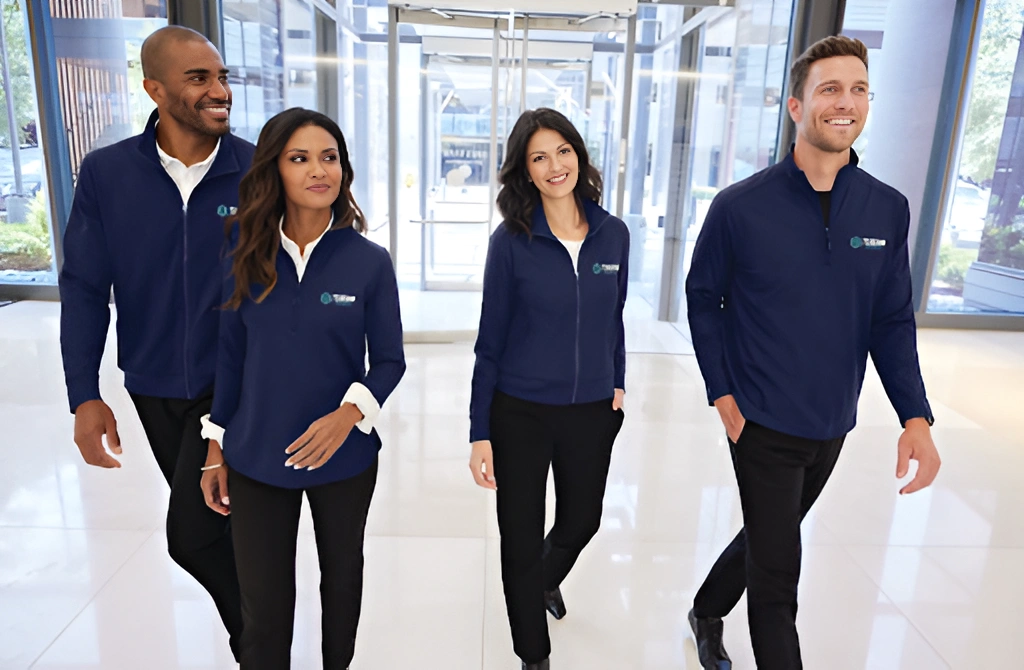
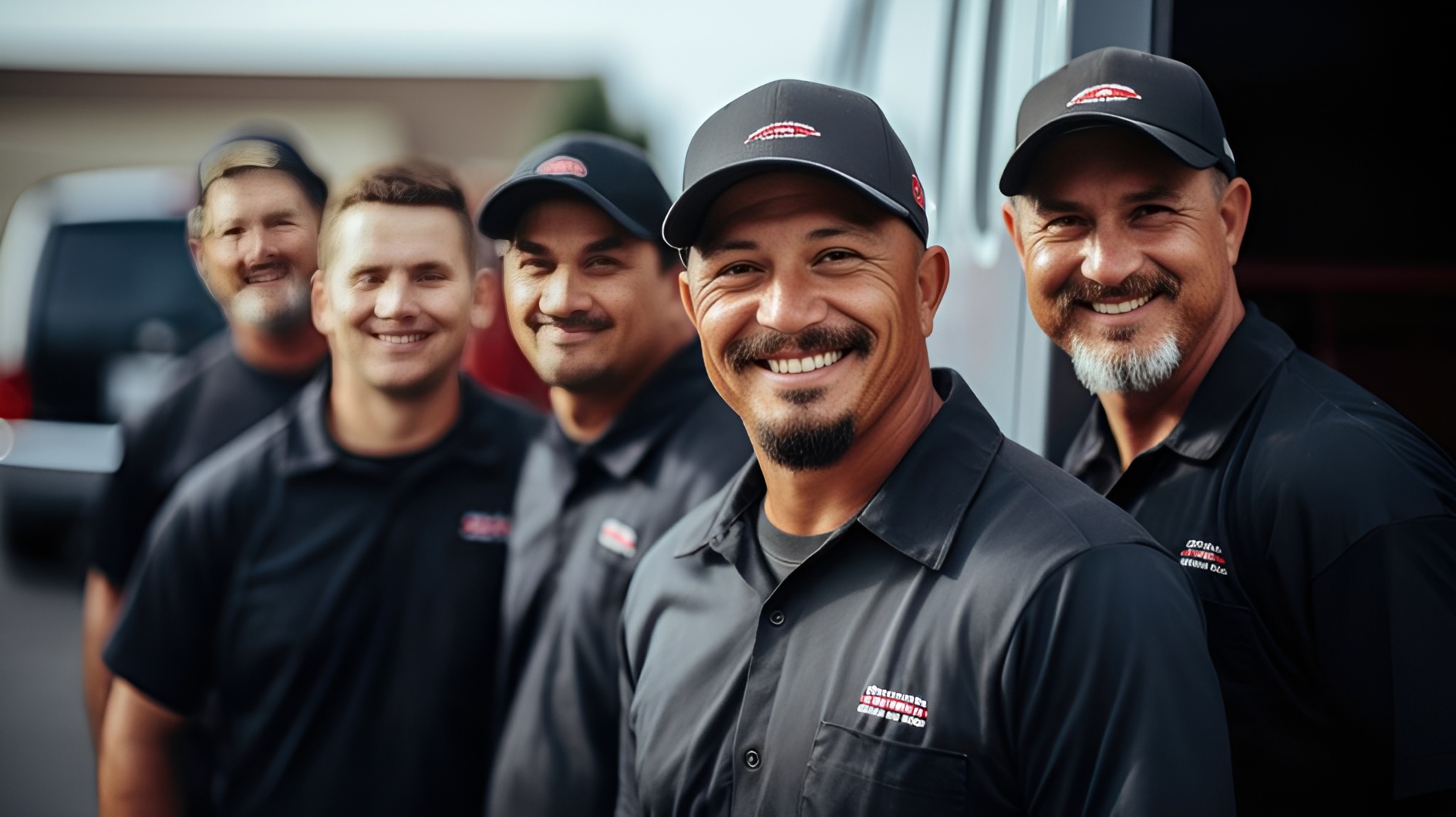
The strongest programs start with hospitality staff uniforms that don’t look like uniforms. Aprons, tees, and hats should photograph well, move well, and survive real kitchen conditions.
Front-of-house pieces need to feel polished and guest-facing. Back-of-house gear needs to prioritize durability, breathability, and function.
Core Merch Pieces Every Cafe & Restaurant Should Consider
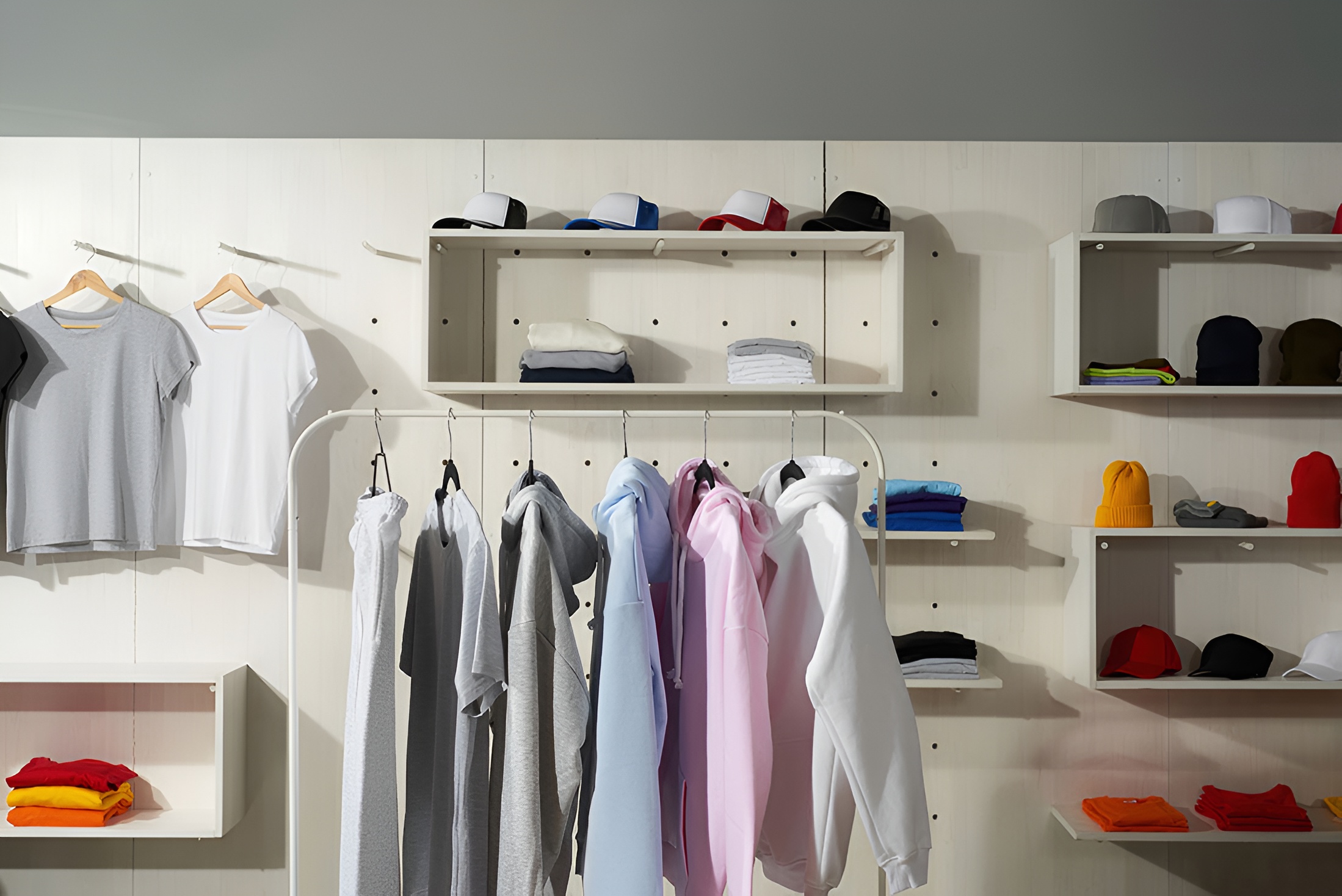
Not everything belongs in every space. But a few core pieces show up again and again for a reason.
Aprons That Work as Hard as Your Staff
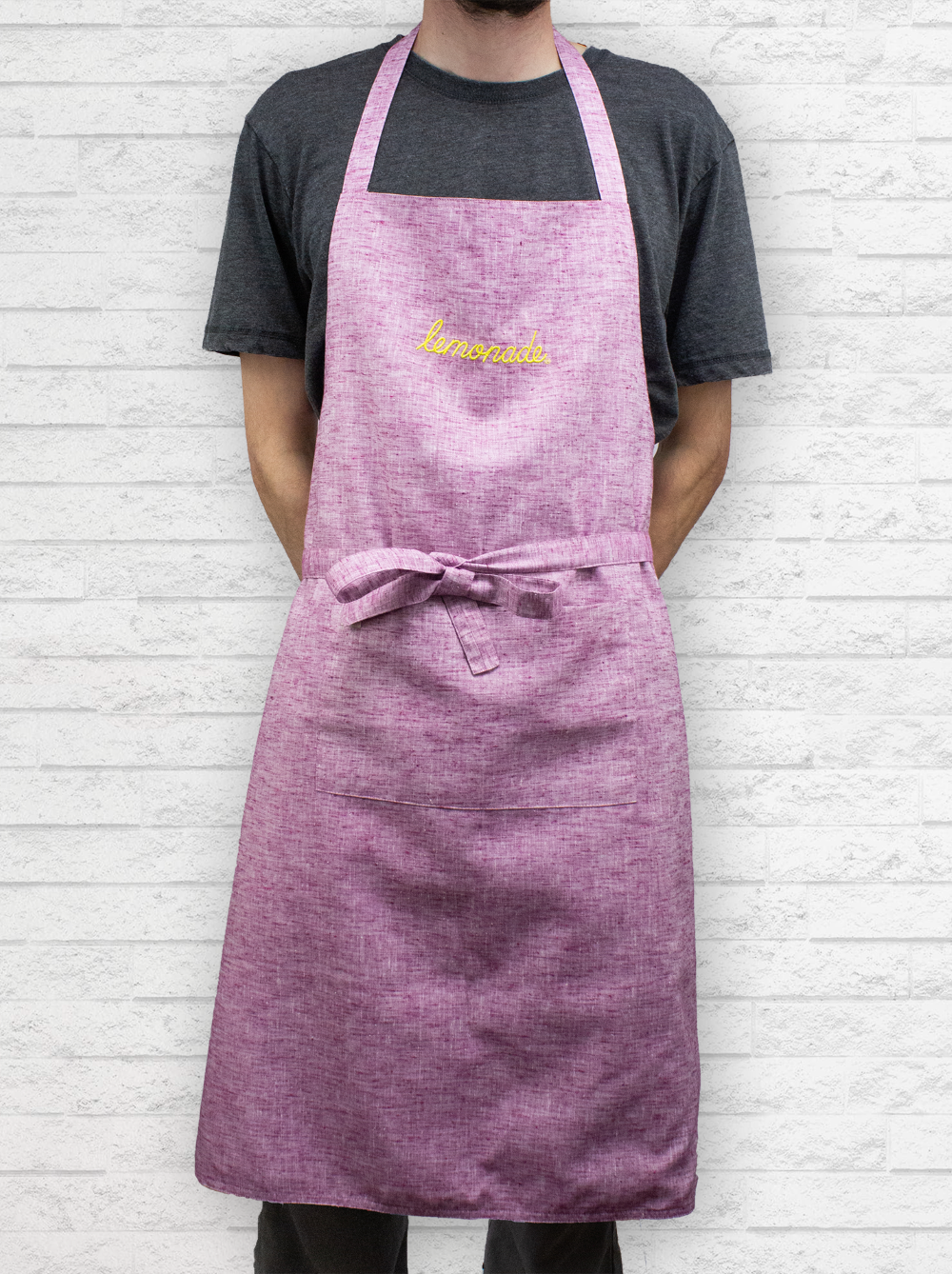
Aprons are tools first, built for protection, speed, and comfort through a full shift. Stain resistance, reinforced seams, smart pocket placement, and adjustable straps matter more than cute details that won’t last a month.
Darker tones work better for espresso bars and high-volume service. Lighter tones can make sense for bakeries or open kitchens where visual cleanliness is part of the experience. Either way, washability is non-negotiable. If it can’t survive constant laundering, it doesn’t belong on the floor.
Branded Organic Tees People Actually Want to Wear
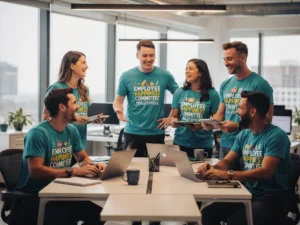
Great restaurant employee shirts start with fabric. Soft, breathable organic cotton or blends that don’t collapse after ten washes. Cuts that work across body types. Inclusive sizing that reflects real teams.
Branding should be subtle. A small chest hit. A sleeve mark. A tone-on-tone back print. The test is simple: would someone wear it on their day off?
Hats, Beanies, and Totes for Everyday Visibility
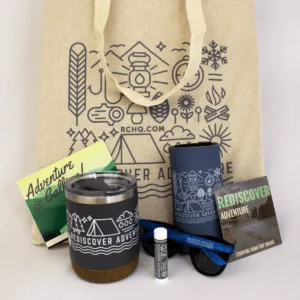
These are quiet workhorses. Easy for staff. Easy for guests. High visibility with relatively low cost. They travel outside your space and extend your brand into daily life without trying too hard.
Specialty Pieces for Your Concept
Blankets for patio cafes. Bandanas for bakeries. Enamel pins for diners. These only work when they make sense for the space.
When they do, they feel intentional instead of forced.
Why “Organic” and Quality Matter in Food & Beverage Merch
Food businesses trade on trust. Apparel should reflect the same values as the menu.
Guests Expect Values to Match the Menu
If you’re pouring single-origin coffee or sourcing local produce, cheap-feeling merch creates friction. Organic and low-impact materials can support the story you’re already telling.
Comfort = Wear Time
Hot kitchens and espresso stations demand breathable fabrics. Comfort directly affects how often something is worn. The more it’s worn, the more value it delivers to staff and brand alike.
Durability in a Tough Environment
Low-quality gear doesn’t survive spills, heat, and constant washing. Investing upfront reduces replacement churn and long-term cost. Quality is not a luxury here. It’s operationally smart.
When your merch feels as considered as your menu, it earns trust, and it gets worn.
Branding & Design Choices That Don’t Age Out in One Season
Trends move fast. Restaurants shouldn’t chase them.
Subtle Branding Beats Billboard Logos
Small placements last longer. Neck prints. Tone-on-tone marks. Designs that don’t scream for attention age better and get worn more.
Color Palettes That Match Your Space
Pull from your walls, menus, and interiors. These colors already belong to your brand. Trend palettes date fast. Neutral foundations with one accent color hold up.
The goal is merch that still feels like you a year from now, not something that expires with the season.
Turning Merch From Expense Line to Revenue Stream
When merch is good, selling it doesn’t feel awkward.
- A small, curated setup near the register works. Merch becomes a souvenir, not a sales pitch.
- Coffee and mug sets. Brunch tee and tote bundles. Artist collaborations. Scarcity and relevance drive demand without overproduction.
- Pre-orders reduce risk. Small batches prevent overstock. Merch becomes predictable instead of stressful.
Build it like a menu: tight, intentional, worth coming back for. Price it like a premium add-on, not a clearance item. Good merch should protect your brand and your margin.
How Righteous Helps Cafes & Restaurants Nail Their Merch
Righteous works with food and beverage brands to build restaurant-branded apparel that actually fits the realities of service.
We translate your space, menu, and vibe into wearable pieces. We source organic, durable fabrics built for kitchens and cafes. We design subtle graphics that staff want to wear and guests want to buy. We handle kitting, streamlined reorders, and retail-ready packaging so merch doesn’t become another operational headache.
Wearable Merch as an Extension of Your Hospitality
When aprons and tees feel good, look sharp, and tell your story, they become part of the experience, not just the uniform.
For cafes and restaurants ready to move beyond generic uniforms and throwaway tees, Righteous helps turn apparel into culture, marketing, and revenue, without losing sight of the people wearing it.
If you’re ready to build merch that works as hard as your team does, Righteous is the right partner to trust.