If your merchandise strategy still lives in a spreadsheet labeled “swag ideas,” it’s time for a reset. In 2026, branded merchandise can’t just exist. It has to perform. It should help your sales team open conversations, move prospects forward, and reinforce trust long after the first meeting.
The brands seeing real return aren’t ordering more stuff. They’re building systems. Systems that align merch with sales goals, funnel stages, and real buyer behavior.
In this blog, we’ll break down how to rethink branded merchandise as a sales asset, how to structure it for measurable impact, and how to make sure every item earns its place in your plan.
Reframing Swag: From Giveaway to Sales Asset
Free doesn’t mean effective. Traditional swag focuses on volume and visibility. The assumption is that more items equal more exposure. In reality, most of that exposure ends up in hotel trash cans and office junk drawers.
Effective merchandise does something specific. It reduces friction. It improves recall. Or it rewards meaningful engagement. The difference isn’t the cost. It’s intentional.
When merchandise is planned around progression, not just attention, it starts to support sales instead of distracting from them.
Start With Sales Goals (Not Products)

Merch should follow the strategy, not the other way around. Before choosing a single item, get clear on what you’re trying to influence. This keeps decisions grounded and prevents budget drift later.
Identify the Outcomes You’re Trying to Influence
Common goals we see teams prioritize include:
- More meetings booked after events
- Higher demo show-up rates
- Faster follow-up responses
- Stronger partner referrals
- Shorter sales cycles
- Increased expansion or deal size
Choose the Sales Moments Where Merch Can Matter
Merch works best at defined moments:
- First Touch: conferences, outbound kits, introductions
- Mid-Funnel: demos, trials, workshops
- Late-Stage: proposals, procurement delays
- Post-Close: onboarding, renewals, referrals
When you anchor merch to moments like these, ROI becomes more transparent and easier to measure.
The Merch Funnel Framework: What to Give, When
Not all merchandise should do the same job. A simple three-tier system keeps things intentional and scalable.
Top-of-Funnel: High-Volume, High-Portability
These items support awareness and booth flow. They should be:
- Lightweight
- Easy to carry
- Broadly useful
The most common failure here is choosing items that feel generic. If it doesn’t serve a purpose beyond branding, it won’t last.
Mid-Funnel: Behavior-Based Rewards
These items reward action. Think demos attended, meetings booked, or qualified conversations. Quality matters more here, and distribution should always be tied to an apparent trigger. This is where merch starts influencing momentum.
Bottom-of-Funnel: Stakeholder Kits
These support trust and decision-making. They should feel curated and intentional, not expensive for the sake of it. Fewer items, better choices. The mistake teams make is using premium kits too early and diluting their impact.
When each tier has a job and a trigger, merch stops being random. It starts moving people from interest to action to partnership.
ROI Strategy #1: Tie Merchandise to a Specific Action

Merch works best when it’s earned. Replacing “take one” with “this is for people who did X” creates a natural value exchange without feeling transactional.
Examples of Action Triggers
- Demo scheduled within a defined window
- Workshop or roundtable attendance
- Trial kickoff completed
- Introduction to a stakeholder or partner
These triggers create clean measurement points and help teams distribute merch consistently.
ROI Strategy #2: Build Memorability Through Consistency
Noise doesn’t create recall. Systems do.
Create a Recognizable System
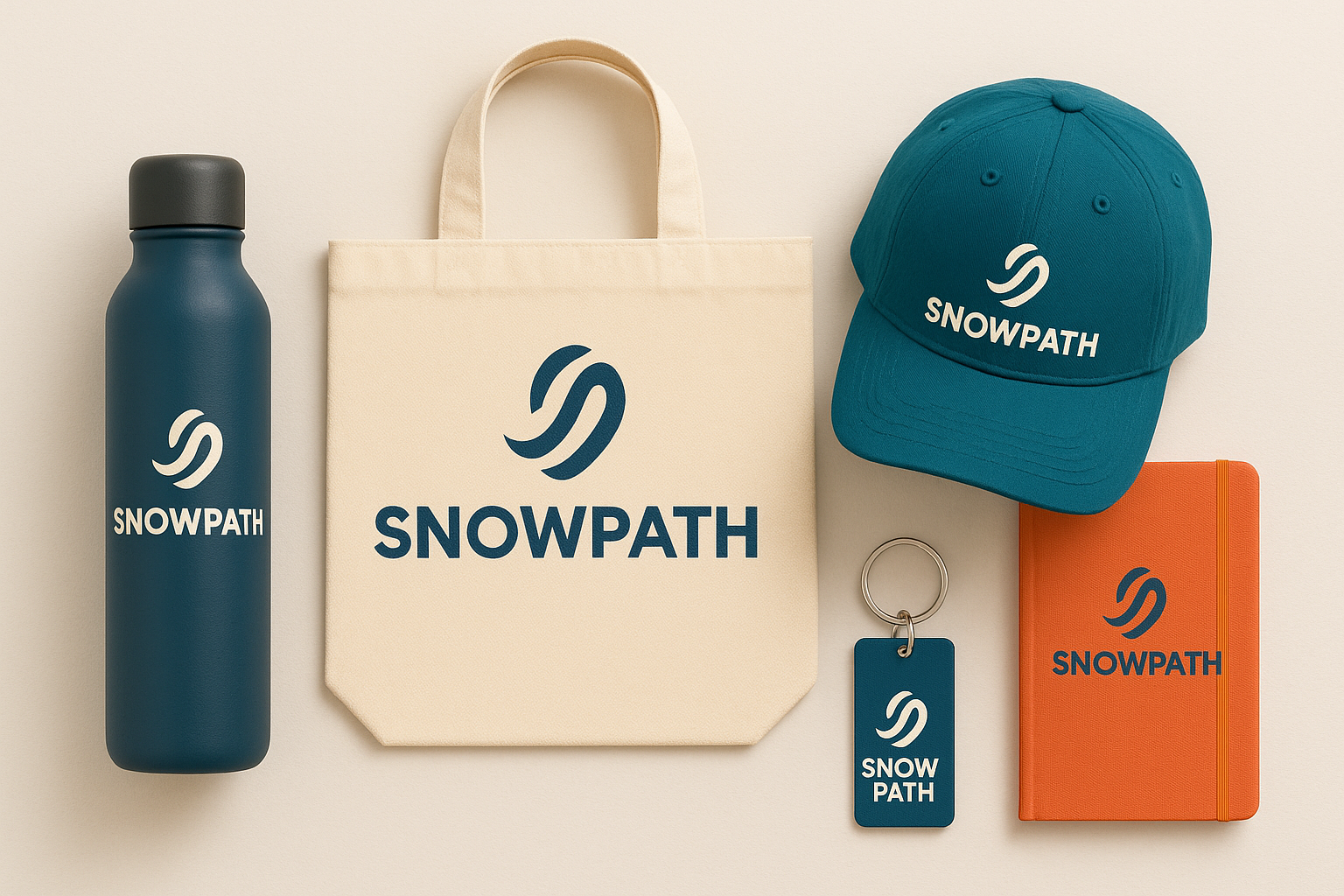
When merchandise shares a consistent color palette, logo placement, and quality level, it reads as intentional. Even simple items feel premium when they belong to a system.
Favor Keepers Over Novelty
If it isn’t used after the event, it isn’t working. Practical, durable items earn repeat visibility without additional spend. That’s where long-term ROI lives.
When your merch looks and feels consistent, and people actually keep it, you earn repeat brand impressions long after the booth is gone.
ROI Strategy #3: Optimize for Utility and Daily Visibility
Before approving an item, run it through three quick filters.
- The Desk Test: Will it live on a desk or get used regularly?
- The Airport Test: Is it travel-friendly and visible in public spaces?
- The Meeting Test: Does it help someone show up prepared?
Utility builds goodwill. Visibility builds recall. Together, they outperform novelty every time.
ROI Strategy #4: Use Merch to Improve Event Performance
Merch should make events easier, not more chaotic.
- Structure Booth Distribution: Separate quick-grab items from conversation rewards and VIP kits. Set daily limits to ensure inventory lasts the entire event.
- Support Lead Capture Without Friction: Scan, one question, one item choice. Train staff on the flow to keep lines moving.
- Drive the Next Step: Pair merch with one explicit next action.
When distribution is structured and each item points to one next step, merch stops feeling cluttered and starts improving conversion on the floor.
ROI Strategy #5: Build Partner and Customer Programs
Some of the highest ROI comes after the deal.
Partner Enablement Kits
Give partners tools they’ll actually use. This builds confidence and keeps your brand present without clutter.
Customer Expansion Touchpoints
Mark renewals, launches, or expansions with curated kits. These reinforce value and create internal champions.
Referral-Ready Gifts
Small, intentional items can encourage introductions without crossing compliance lines. Subtlety matters here.
When partner and customer kits are useful, timed, and tasteful, they extend the relationship and turn good accounts into repeat revenue and referrals.
How to Measure ROI Without Overcomplicating It
You don’t need perfect attribution. You need consistency.
Track 3-5 Metrics You Can Maintain
- Cost per qualified lead
- Meeting-booked rate
- Demo show-up rate
- Follow-up reply rate
- Pipeline influenced by the event
Keep Attribution Simple
CRM tags like “received event kit” or campaign codes tied to events are often enough.
Compare Like for Like
Year-over-year events. Same audience segments. Same triggers with different items.
Measure what you can repeat, keep the inputs consistent, and you’ll see what merch is actually moving, without drowning in attribution.
Budgeting Like a Revenue Team
Strong programs plan for reality.
- Allocate the budget by funnel stage.
- Size inventory to expected conversations, not foot traffic.
- Build a buffer stock to avoid rush orders.
Hidden costs add up fast. Shipping, storage, kitting labor, and leftovers all count toward ROI.
Make Your Merchandise Earn Its Place in the Sales Plan
When merchandise is planned like a sales tool, it stops being a guessing game. Clear goals. Defined triggers. Tiered systems. Consistent execution. Simple measurement.
That’s how swag turns into support. Righteous helps teams turn merch into a repeatable sales system: strategy, sourcing, fulfillment, and reorders included. If you’re ready to stop guessing and start measuring what works, we’ll build it with you.