
When companies think about custom tees, their minds go straight to summer picnics or softball teams. Those are wonderful. But the real magic tends to show up somewhere quieter: the standing groups that gather year after year. That is where a simple shirt stops being swag and starts saying something. You are part of this. You belong here.
This blog cuts through the noise so you can get your team looking sharp without losing your mind.
Why a Team Tee Earns Its Keep
A team tee isn’t just a shirt with a logo on it. It is a small, visible signal that someone is part of a group, and it sets the tone before anyone says a word. Team tees are a visible extension of your culture, and when they look good, people feel it. There’s a real difference between gear that gets stuffed in a drawer after the first wear and gear that becomes someone’s favorite weekend shirt. That difference comes down to thoughtfulness: fit, fabric, and a design that actually means something to the people wearing it.
Good team tees also do real work on morale. When people feel like they’re part of something, they show up differently. A well-made team tee signals that the company invested in the experience, not just the activity. That’s the kind of detail that sticks around long after the event ends.
The Teams Inside Your Company That Deserve a Tee
Most companies stop at the event shirt or the rec team, but the groups that shape belonging are the ones that show up all year. Committees turn a volunteer assignment into a role people are proud to hold. Leadership teams in matching tees read as a unified front. Department tees build internal identity and friendly rivalry. Employee resource groups use a tee as a statement of community.
A new hire cohort tee tells someone they belong before they have found the coffee machine. Volunteer crews stay recognizable and walk away with a keepsake. Recognition groups get a reward people actually wear. These are the teams where people decide whether they feel seen, which is the same lever that drives retention.
Figure Out What Your Team Actually Needs First
Before you look at a product page, get clear on which group this is for and what the tee is meant to do. A leadership offsite tee, a new hire cohort tee, and an ERG tee are not the same brief. Some want a polished, on-brand look. Others want something soft and casual people will actually reach for on a Saturday. Decide the tone first, because it drives fit, color, and how loud the branding should be. Nail down your headcount and sizing range before anything else.
Mixed-gender teams with a wide size spread need a vendor who stocks inclusive sizing without making it complicated. Decide whether you need names, the group identity, or both, since that affects production time and cost. If your launch or event is six weeks out, start now. Branded team tees with custom decoration take longer than most people expect.
Choosing the Right Tee Style and Fabric
Soft everyday fabrics like cotton and tri-blends are almost always the right call, because people actually keep wearing them. Save moisture-wicking performance fabric for the groups that are genuinely active, like the rec team.
Fit matters more than most buyers expect, especially on a mixed-size team. Look for vendors who offer both standard and fitted cuts, and check whether women’s sizing is a true women’s cut or a smaller version of the men’s style. For custom team tees, the budget tier also plays a role.
Entry-level options get the job done for one-off groups or large headcounts with tight budgets. The mid-range offers better fabric quality and greater customization flexibility. Premium team tees with all-over sublimated printing and reinforced stitching make sense for groups that wear them year-round or want gear that doubles as company pride merchandise.
How to Brand Your Team Tees Without Overdoing It
Logo placement on team apparel follows different rules than on polos or jackets. The chest is the primary real estate, and keeping it clean reads better from a distance and in photos. A logo stacked above or below a team name looks more intentional than cramming both side by side. For team tees, staying consistent with your company’s brand colors matters. Printing technology can shift hues, so work with your vendor to match Pantone or get a physical sample before full production.
For everyday tees, screen print is the workhorse and looks great on cotton blends; embroidery suits leadership or recognition groups, and sublimation makes the most sense for the athletic crowd.
Also worth considering: a team name or mascot sometimes does more work than a logo alone. It gives the team an identity that feels distinct from the corporate brand, which people tend to respond to more strongly.
What to Watch Out for When Ordering
Minimum order quantities catch many buyers off guard. Many team tee vendors set minimums at 12 or 24 units, which works fine for most teams but creates friction for smaller groups or pilot programs. Ask upfront and ask about reorder minimums, too, since membership changes are common and you don’t want to be stuck ordering 24 team tees to replace 3.
Collect sizes before you place the order, not after. Chasing down sizes from 30 people over two weeks is the most avoidable delay in this whole process. Send a simple form, set a deadline, and stick to it. Production and shipping lead times for custom team tees for businesses typically run two to four weeks, sometimes longer during peak seasons. Build in a buffer. Before you finalize, ask your vendor what the reorder process looks like. If adding a new member means hitting a full new minimum, that’s worth knowing before you commit.
Making the Most of Your Tee Budget
When you’re presenting this spend internally, cost per unit is a cleaner metric than total program cost. Breaking it down to the per-person cost for each team tee investment feels proportionate. Bundling team tees with other team gear, like matching hats or warm-up layers, often unlocks better pricing and gives your team a more cohesive look without a big jump in spend.
If you are outfitting several standing groups across the year, committees, cohorts, or departments, a team store model is worth exploring. It shifts the ordering burden off HR, lets employees self-select sizes, and keeps everything organized under one program. Team apparel for companies with ongoing needs almost always benefits from this kind of structure over time.
FAQs
What fabric is best for company team tees?
Soft cotton and tri-blends win for everyday wear because people actually keep wearing them. Save performance fabric for groups that are genuinely active.
Which internal teams should get their own tee?
Any standing group that meets year-round: committees, departments, ERGs, new hire cohorts, volunteer crews, and recognition groups. These are where a tee does the most for belonging.
How should company logos be placed on team tees?
The chest is prime real estate. A clean logo stacked with the team name reads better from a distance and photographs more professionally.
Give Every Team a Tee Worth Wearing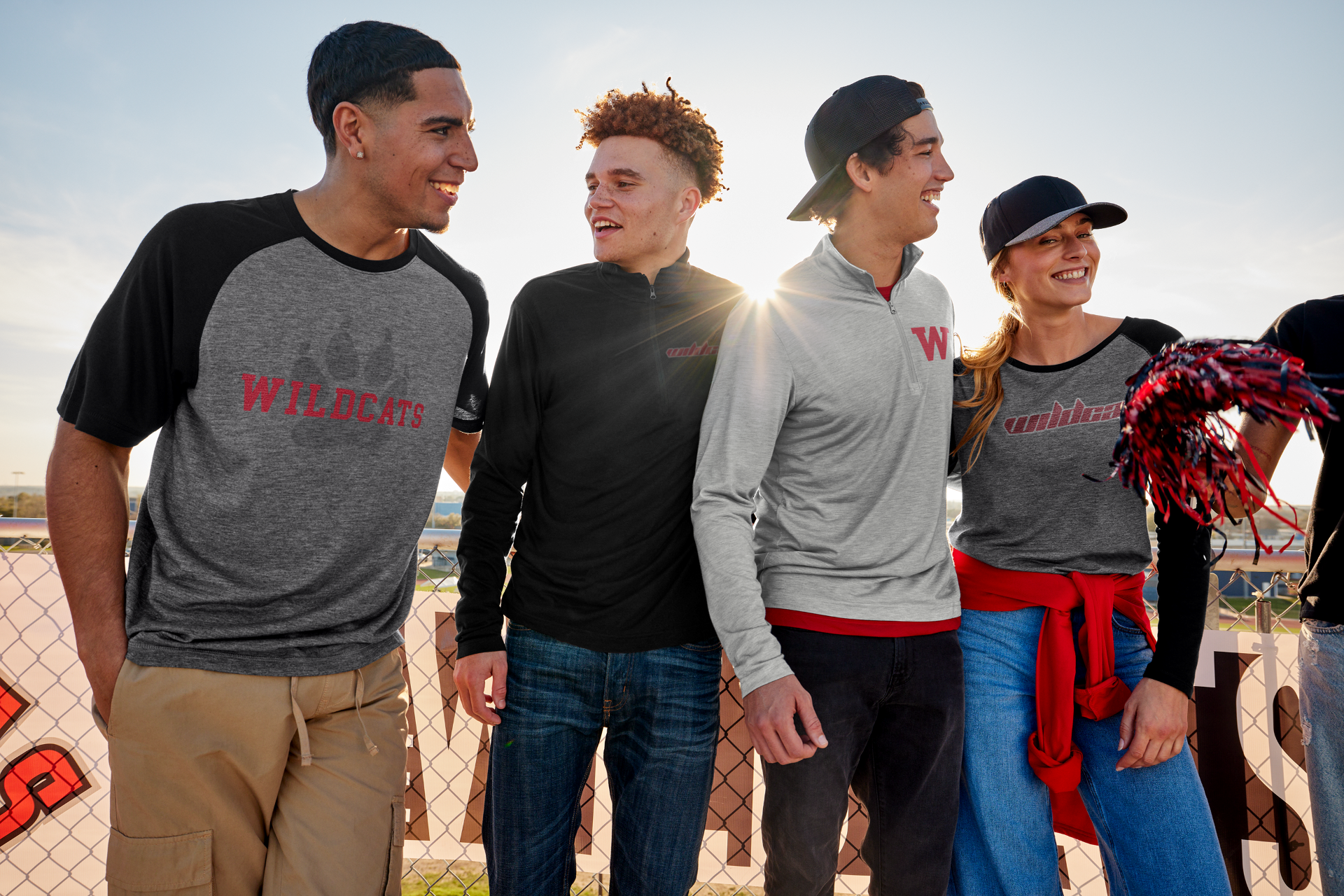
Team tees should feel organized, wearable, and worth the investment. The right program gives every group a sharp look, keeps sizing and ordering simple, and helps HR or culture teams avoid the usual back-and-forth that slows everything down. Whether you are outfitting a single committee or building tees for every standing group in the company, Righteous can help you choose the right styles, decoration, add-ons, and ordering setup without turning it into a full-time project.
For a cleaner rollout and a stronger team presence, work with Righteous to build team tees that look cohesive, fit right, and are easy to manage year after year.